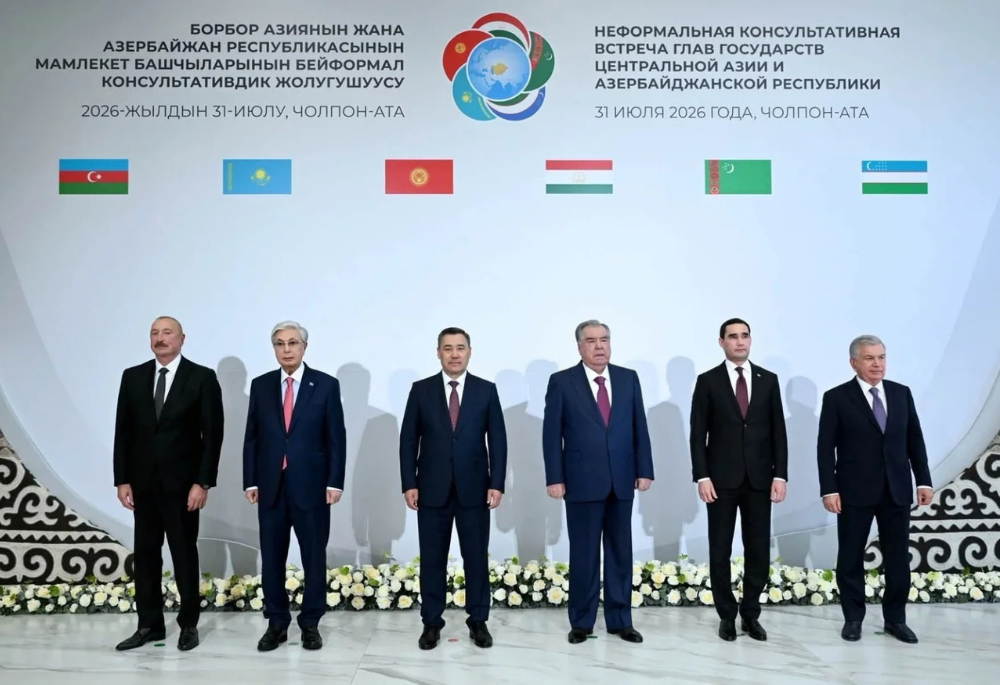
An informal consultative meeting of Central Asian and Azerbaijani leaders was held Friday in Cholpon-Ata, Issyk-Kul region of Kyrgyzstan, where the Cholpon-Ata Declaration was signed. President of Turkmenistan Serdar Berdimuhamedov, President of Kyrgyzstan Sadyr Zhaparov, President of Kazakhstan Kassym-Jomart Tokayev, President of Uzbekistan Shavkat Mirziyoyev, President of Tajikistan Emomali Rahmon and President of Azerbaijan Ilham Aliyev attended the signing ceremony, Kyrgyzstan’s national news agency Kabar reported.
During the meeting, the heads of state discussed issues related to further deepening regional cooperation, developing transport and logistics connectivity, adapting to climate change and ensuring regional energy security. They also exchanged views on areas of mutual interest.
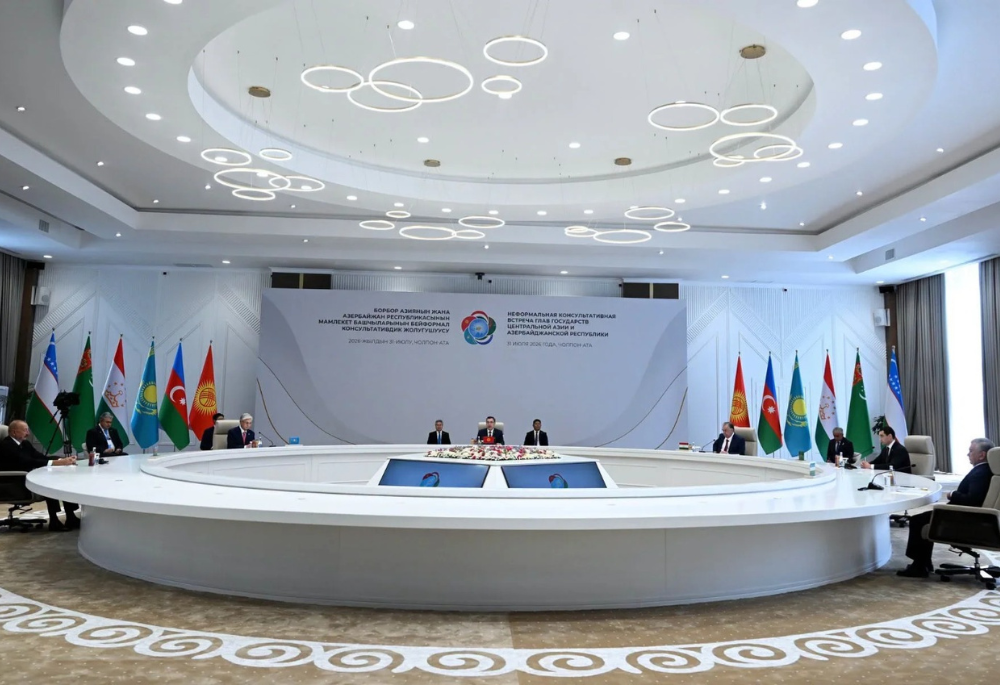
Kyrgyz President Sadyr Zhaparov noted that regional cooperation had reached a new level in recent years due to strengthened mutual trust. He also highlighted prospects for cooperation in tourism, emphasizing Kyrgyzstan’s initiative to introduce a single tourist visa for foreign citizens visiting Central Asian countries and the importance of developing coordinated solutions in this area.
Zhaparov highly assessed Turkmenistan’s chairmanship in the Consultative Meetings of the Heads of State of Central Asia format and expressed Kyrgyzstan’s readiness to work together for the successful holding of the Eighth Consultative Meeting of the Heads of State of Central Asia and Azerbaijan, scheduled to be held in Avaza on Oct. 8, 2026.
At the conclusion of the meeting, it was noted that the Cholpon-Ata Declaration reflects the high level of mutual trust between Central Asian states and Azerbaijan, their commitment to the principles of peace, good-neighborliness and sustainable development, as well as their readiness to further expand regional cooperation.