One of the key factors determining a country’s competitiveness in today’s geo-economic landscape, including Turkmenistan, is sustainable transport connectivity and efficient logistics. Robust and reliable transport systems are also vital for achieving the Sustainable Development Goals, including ensuring food security, promoting health, providing decent work, developing sustainable cities, and combating climate change. By increasing the production of export-oriented goods and trade with foreign countries, Turkmenistan is focused on developing new transport and logistics routes along the North-South and East-West corridors and boosting investments in this sector.
Geographically, Turkmenistan borders Kazakhstan and Uzbekistan to the north and northeast, Iran and Afghanistan to the south and southeast, and is washed by the Caspian Sea to the west. Through the Caspian Sea, it has access to Azerbaijan, Kazakhstan, Iran, and Russia. Positioned at the crossroads of North-South and East-West transport-transit routes, Turkmenistan, along with the broader Central Asia and Caspian Basin region, serves as a promising economic partner for European and Asian countries and a major continental transport-transit hub.
Turkmenistan has developed a logistics strategy aimed at modernizing the transport sector and strengthening its position within the international communications infrastructure. This strategy was presented at the Turkmenistan Investment Forum. As highlighted by Turkmenistan and international experts, the favorable opportunities and investment prospects in country’s transport and logistics system stem from its advantageous geographical location, significant role in international transport corridors, political stability, and an “open doors” policy based on principles of neutrality and mutually beneficial cooperation. Additionally, the legal protection of foreign investments is ensured through international agreements. To enhance the efficiency of freight transport, Turkmenistan is investing in modern, high-tech infrastructure and strengthening international cooperation.
Within the framework of China-Europe routes, corridors such as China-Kazakhstan-Azerbaijan-Georgia-Türkiye-Europe are being developed. New routes are also being established, including Tajikistan-Uzbekistan-Turkmenistan-Iran-Türkiye and Kyrgyzstan-Uzbekistan-Turkmenistan-Iran-Türkiye. The primary advantage of international transport corridors passing through Turkmenistan is a significant reduction in travel distances. Turkmenistan also serves as a transcontinental economic bridge, facilitating interaction between European, Asia-Pacific, and South Asian economic systems. The further development of major logistics centers in Garabogaz (border with Kazakhstan), Serakhs and Akyayla (border with Iran), and Farap (border with Uzbekistan) will significantly enhance the country’s transit capabilities and elevate its role in international freight transport.
Promising projects aimed at strengthening Turkmenistan’s transit potential include the construction of the Ashgabat-Arkadag-Awaza railway and the Torghundi-Herat-Kandahar railway, which will extend from Turkmenistan’s western border through Afghanistan to Pakistan and further to India. Within this project, the Ymamnazar-Aqina-Andkhoy section is already under construction. The signing of the Ashgabat Agreement in 2011 laid the foundation for creating an international transport and transit corridor between Oman, Iran, Turkmenistan, and Uzbekistan, with Qatar and Kazakhstan later joining the agreement.
Particular attention from investors is drawn to the Trans-Caspian International Transport Corridor, also known as the Middle Corridor, which holds significant promise for Turkmenistan’s economy and the development of transport cooperation. This route connects China and Europe, passing through Kazakhstan, the Caspian Sea, Azerbaijan, Georgia, Türkiye, and onward to Europe, forming part of the broader “One Belt, One Road” initiative aimed at reviving the Great Silk Road in modern times.
This route is used for container transport via rail and sea. Its current capacity is 6 million tons per year, with an expected increase to 10 million tons by 2027. The corridor is promising in terms of reducing freight transport times.
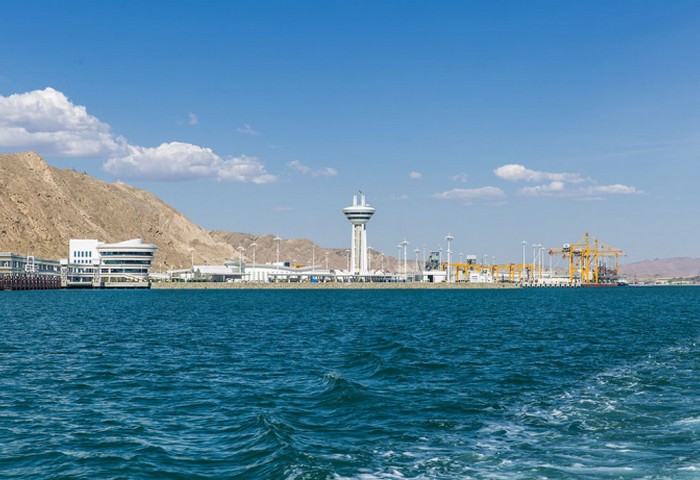
As a central link, Turkmenistan is actively integrating into this route through the Turkmenbashi International Seaport and the construction of new transport infrastructure. Turkmenistan has also ratified several resolutions related to container transport, notably in 2021, when it adopted laws to join the “Customs Convention on Containers” and the “Convention on the Customs Treatment of Pool Containers Used in International Transport.” These steps facilitate and streamline the efficient movement of goods across the country’s borders and contribute to increasing the volume of container transport.
In October 2024, the European Union and Turkmenistan launched the Coordination Platform for the Trans-Caspian Transport Corridor. During the event, it was emphasized that the EU views Turkmenistan as a key partner in strengthening ties between Europe and Central Asia. Under the EU’s “Global Gateway” initiative, the Trans-Caspian Transport Corridor has the potential to create faster and safer trade routes, opening new opportunities for businesses, attracting investments, and generating jobs. The joint efforts of all parties aim to reduce the trade route between Europe and Asia to just 15 days, positioning the corridor as a vital trade hub between Asia and Europe while supporting Turkmenistan in this endeavor.
The primary role of the Coordination Platform is to promote the corridor and coordinate efforts to implement priority projects in hard and soft infrastructure across Central Asia. It will also oversee investments and activities in the South Caucasus and Türkiye that are critical to enhancing the operational efficiency and seamless connectivity of the Trans-Caspian Transport Corridor. The platform aims to bolster the corridor’s resilience, transforming it into a multimodal route connecting Europe and Asia. It will also drive investments in railway, road, and port infrastructure, strengthen economic ties between Europe and Central Asia, and enhance the security and sustainability of transport corridors.
Collaborative efforts within the platform involve actively introducing technological innovations in the transport sector and attracting comprehensive investments in infrastructure and regulatory reforms to create a favorable environment for supporting cargo flows, expanding trade, and fostering economic growth in Central Asia and beyond.
In June 2025, the first batch of cargo from China passed through the Turkmenbashi International Seaport, marking the official opening of the corridor and confirming Turkmenistan’s participation in this route. The first freight train departed from its starting point in Jinhua, China, with a train consisting of 100 container wagons traveling through Almaty, Tashkent, and Ashgabat. According to international experts, the launch of this new route will alleviate pressure on the traditional Aktau-Baku logistics line and accelerate the delivery of Chinese goods to Central Asian and Eastern European markets.
To enhance the capacity of the Trans-Caspian Corridor, Turkmenistan is implementing projects to develop port infrastructure and construct new ferries. Several members of the “Türkmen logistika” Association have successfully completed projects to build cargo terminals at border points, creating convenient conditions for storage, transshipment, and documentation processing. Private companies are prioritizing the automation of logistics processes and the adoption of digital solutions in the transport sector. Turkmen logistics companies are keen to exchange expertise and jointly develop electronic systems for cargo tracking, warehouse management, and online platforms where international manufacturers can directly request transport services from Turkmen carriers. Additionally, these companies are actively interested in procuring modern trucks, trailers, warehouse equipment, and specialized machinery from international partners to improve the quality of logistics services and meet global standards in freight transport.
The Organization of Turkic States has shown significant interest in the Trans-Caspian International Transport Route, as it is poised to become a foundational route for freight transport between Europe, Asia, and other regions. The development of this corridor will not only improve logistics flows but also enhance the resilience and efficiency of international trade. Thanks to its strategic advantages, the corridor has immense potential to become a primary channel for transporting goods, supporting the economic development of countries within the Organization of Turkic States. To achieve these goals, further infrastructure modernization, the development of multimodal transport solutions, and effective cooperation among regional countries are essential.
According to international experts, the Trans-Caspian Corridor is expected to enter a new phase of accelerated development in the near future, becoming a major trade route in Eurasia and a critical component of the global supply chain. An increasing number of countries will participate in this transport route, with cargo volumes expected to grow significantly.
International experts believe that investments in Turkmenistan’s transport sector will drive economic development not only for Turkmenistan but also contribute to the further integration of Central Asia into the global transport network, transforming the Central Asian and Caspian regions into a key hub for international trade and transport. Turkmenistan views the sustainable development of its transport system as a foundation for global progress and is ready to strengthen partnerships to realize ambitious plans and projects.
Sapa Gurbanberdiyev, Deputy Chairman of the “Türkmen logistika” Association
Source: nCa