Turkmenistan and Azerbaijan outlined new areas for cooperation in trade, energy, transport, logistics and investment at the ninth meeting of the Turkmen-Azerbaijani Intergovernmental Commission on Economic Cooperation in Ashgabat, Turkmen state media reported on Wednesday.
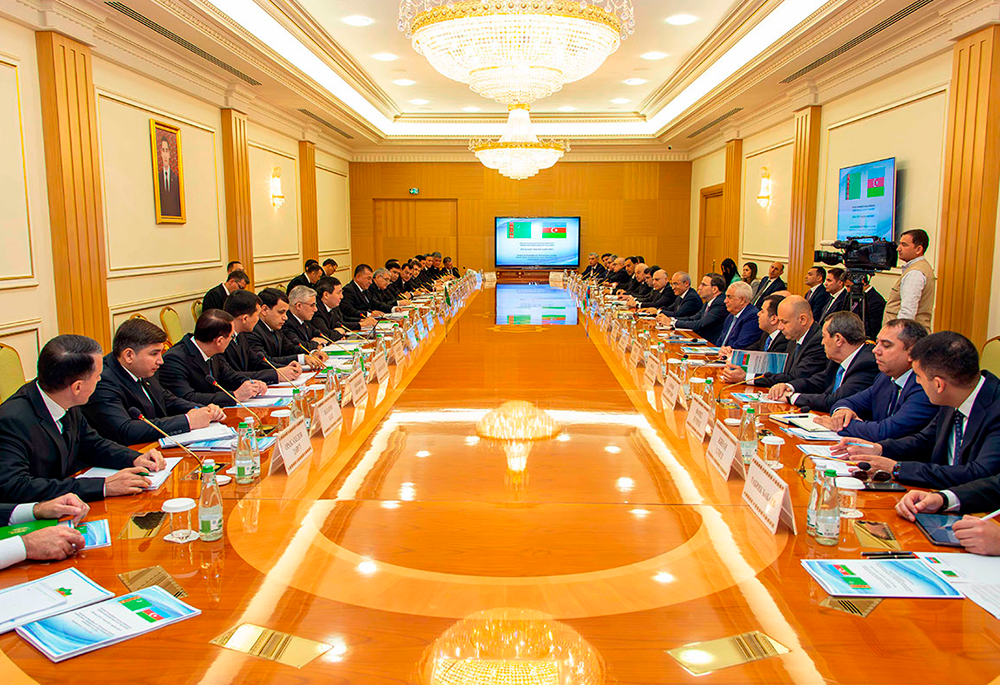
The ninth meeting of the Turkmen-Azerbaijani Intergovernmental Commission on Economic Cooperation, held at the Chamber of Commerce and Industry of Turkmenistan, brought together members of the Turkmen side of the commission and an Azerbaijani delegation led by Economy Minister Mikayil Jabbarov.
Participants noted, state visit of President of Turkmenistan Serdar Berdimuhamedov to Azerbaijan in June had created new opportunities for bilateral cooperation, with the two countries signing a package of agreements between government ministries and sectoral agencies.
The two sides reviewed the implementation of agreements reached at the previous commission meeting and discussed expanding trade and economic ties. They noted steady annual growth in bilateral trade and agreed on plans to strengthen cooperation in the economy, investment, advanced technologies and trade. The participants also proposed holding joint business councils and meetings on a regular basis.
Energy cooperation featured prominently on the agenda. with the two countries highlighting opportunities to coordinate efforts in the oil and gas sector and develop large-scale infrastructure projects, supported by their substantial hydrocarbon resources. They also discussed prospects for cooperation in the power sector, referring to the 1,574-megawatt power plant under construction in the Turkmenbashi district of Turkmenistan's Balkan region.
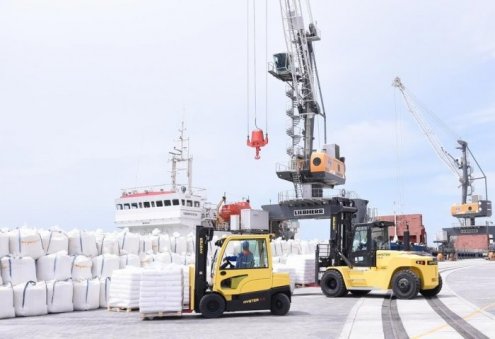
The commission also reviewed the current state and future prospects for cooperation in transport, logistics, transit, digital development and telecommunications. The two sides highlighted the strategic role of the Turkmenbashi International Seaport and the Baku International Sea Trade Port in facilitating cargo transport between Asia and Europe and strengthening the Caspian region's logistics potential.