
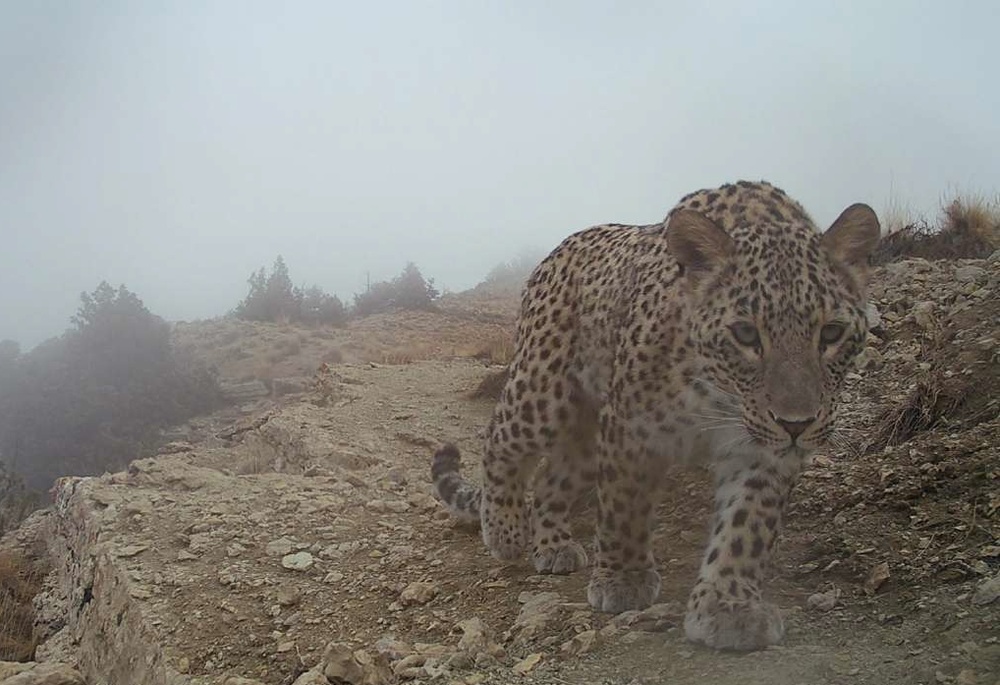
Turkmenistan reported progress in wildlife conservation in 2025, estimating the Caucasian leopard population at 60–80 individuals, according to the country’s 2025 report on wildlife and protected areas. The report was prepared with input from international and national experts and specialists from Turkmenistan’s Ministry of Environmental Protection.
In Turkmenistan, the Caucasian leopard primarily inhabits mountainous and foothill regions, including the Kopetdag Mountains along the Iranian border, the Greater Balkhan Range, the southern coast of Garabogazgol, the Badhyz and Syunt-Hasardag State Nature Reserves, and parts of the Balkan and Kopetdag ranges where suitable habitats and prey are available.
In 2025, protected areas saw stronger law enforcement, expanded use of camera traps, and implementation of the SMART system, improving monitoring and patrolling.
On the international level, Turkmenistan advanced its environmental commitments by joining the CITES Convention, participating in the Convention on the Conservation of Migratory Species of Wild Animals, and implementing the updated CAMI Action Program for 2026–2032.
The report notes that the recovery of large predators depends on prey species such as goitered gazelles and mountain goats, which face pressure from poaching and habitat loss. Limited prey availability constrains the growth of leopards and other predators.
In addition to the Caucasian leopard, Turkmenistan’s protected areas support populations of caracal, Pallas’s cat, gazelles, mountain goats, ground squirrels, badgers, and rare bird species.
Photo: Team Bars Turkmenistan, Tatyana Rozen, Atamurad Veyisov
.jpeg)
.jpeg)
.jpeg)
.jpeg)
.jpeg)
.jpeg)
.jpeg)
.jpeg)


33271-495x4352.jpeg)