
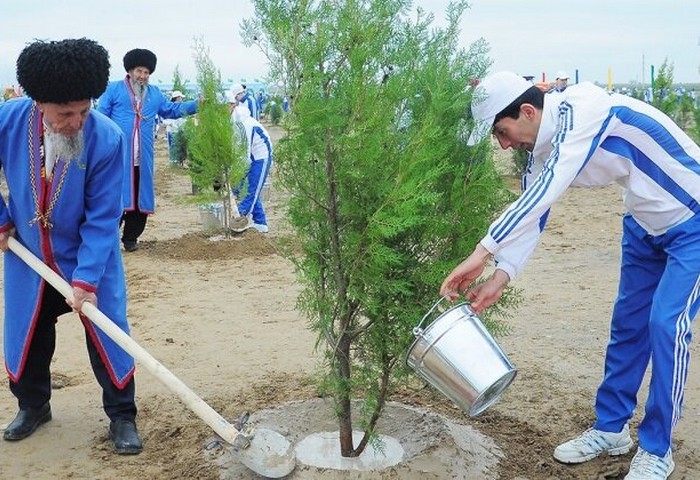
Turkmenistan is working on updating its National Forest Program, which expires this year. The first such strategic document covered the period from 2013 to 2020, Neutral Turkmenistan reported on Thursday.
The new program outlines several priorities, including reforestation of areas in the Karakum Desert, restoration of tugay forests—the natural habitat of the noble deer—and the creation of green spaces along rivers, highways, and foothill regions. Special attention is given to protecting rare plants listed in Turkmenistan’s 2024 Red Book, with efforts to propagate them in reserves and nurseries.
The program also foresees the introduction of digital technologies such as remote Earth sensing, digitization of the state forest cadastre and registry, forest inventory, and early detection systems for fires, pests, and plant diseases.
One key focus is support for private horticulture, including the development of vineyards and orchards, as well as non-timber sectors like medicinal plant harvesting, honey production, and nut cultivation.
Beyond ecological goals, the program incorporates economic mechanisms such as long-term land leases for ecotourism and agricultural projects, attracting investment, and job creation.
From 1998 to 2024, Turkmenistan has greened 227,000 hectares and planted over 162 million trees. According to land fund data, mountain forests cover 524,000 hectares, desert forests 9.36 million hectares, and tugay forests 38,000 hectares.









33451-90x604.png)