
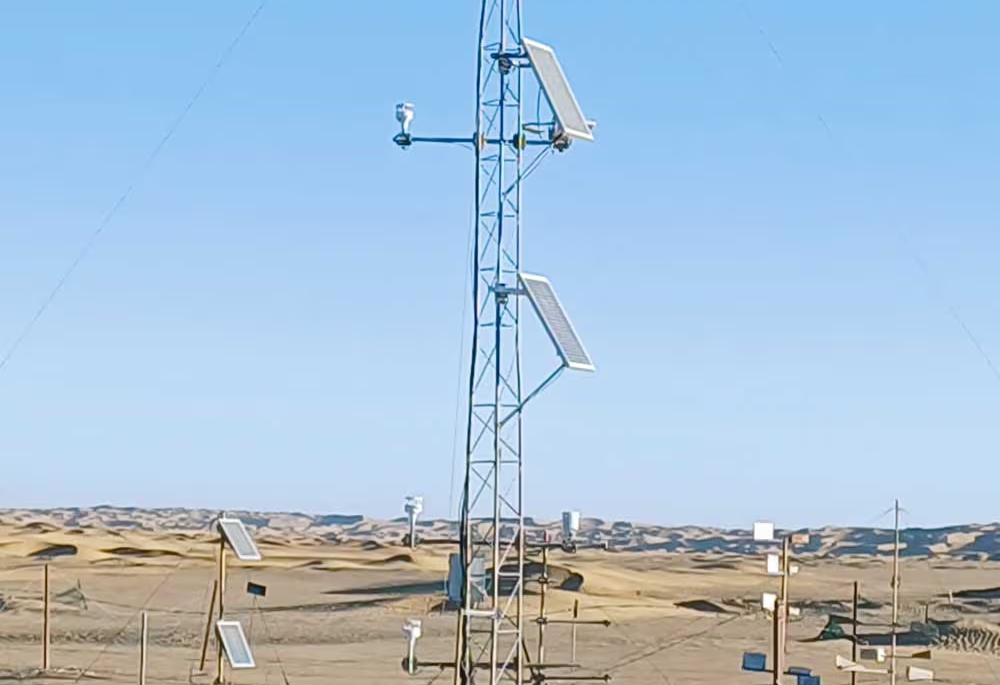
Turkmen and Chinese scientists have expanded cooperation in desert studies under the Belt and Road Initiative. Joint work between Turkmenistan’s National Institute of Deserts, Flora and Fauna and the Xinjiang Institute of Ecology and Geography of the Chinese Academy of Sciences focuses on China’s practical experience in protecting transport infrastructure under extreme climatic conditions.
A key focus is the world’s longest highway built across a desert, which runs through the Taklamakan Desert. The route stretches more than 560 kilometers, and its stable operation is ensured by an artificial forest belt covering more than 3,000 hectares, according to the Neutral Turkmenistan newspaper, published Monday.
The man-made ecosystem includes about 20 million drought-resistant plants that protect the highway from shifting sands. It is supported by a system of electrified wells using mineralized water.
The project has received international recognition and contributes to biodiversity restoration. Birds and small mammals inhabit the forested areas, while particular attention is given to technology used to cultivate cistanche on saxaul roots.
Similar natural conditions in the Taklamakan and Karakum deserts give the exchange of experience practical value. Turkmenistan, with decades of expertise in desert studies, views the cooperation as a contribution to sustainable ecosystem development and to advancing the initiative to establish a U.N. regional center for climate technologies in Ashgabat.








33451-90x604.png)